
Your Plastic Waste Can be Food??
Updated: May 9
For bacteria at least!
Plastic waste has been a really huge problem within the last couple decades, building up more and more in our environment. This has been affecting the animals, plants, and microorganisms that inhabit our world. 12 million metric tons enter our oceans every year! Naturally this has drove scientific research into how to reduce plastic waste.

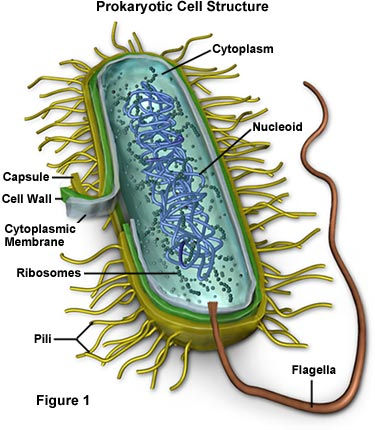
Scientists at first started with modifying the bacteria E. coli since this was readily available and extremely common, but this bacteria prefers to break down sugars, and would digest the plastic very slowly. In 2016 scientists located in Sakai Japan found a bacteria that was naturally breaking down the plastic by itself in a plastic water bottle recycling plant. This bacteria was known as Ideonella sakaiensis which is a gram negative, rod shaped bacteria. The scientists believed it naturally evolved to begin digesting the plastic, because so much of it entered its environment. The major type of plastic Ideonella sakaiensis will digest is polyethylene terephthalate (PET), which is the common plastic used to make disposable water bottles.

Plastic is made up of long monomer chains that naturally line up with other monomer chains to create PET. The bonds between the monomer chains are very strong which is what gives plastic its durability. This also is what makes it difficult for organisms to digest, since only the bonds between monomer chains can be broken, and not the actual bonds between monomers. Ideonella sakaiensis is able to break the bonds between monomers which is what makes it so special.
You may be wondering now, why don't we just grow a bunch of this bacteria and put it into every landfill, and let the bacteria have the feast?The rate at which we as humans produce plastic waste is much higher than the rate at which the plastic will be destroyed by this bacteria, and additionally the bacteria needs to be kept above 30 degrees Celsius. These is a regional limiting factor to the widespread usage of this bacteria.
There is a new type of hope however, scientists in 2018 began research on a type of grub which is also able to digest plastic at a faster rate. However its the type of plastic that makes up bubble wrap and plastic bags rather than plastic bottles. https://pmc.ncbi.nlm.nih.gov/articles/PMC11856541/

According to the research paper, only about 10% of the plastic that we toss is actually recycled. Insects have had to selectively evolve to overcome this challenge of either competing with plastic to find their food, or adapting to digest plastic as a food source. The microbiome of the insects guts have started changing and they are able to digest plastic through their gut microbiome. Now in more recent years (2022) there is more than just a grub being discovered, the top 3 organisms that can degrade plastic are the Wax worm (Galleria mellonella), Mealworms (Tenebrio molitor), Superworms (Zophobas atratus). Each of these organisms carry the microbiota in their gut that is able to digest plastic.
How are these organisms able to digest plastic and why can't everything?
These organisms are able to digest plastic through a three step process that not every organism can achieve.
Step 1. Mastication: the organism has to break the plastic down into tiny pieces to increase the surface area of the plastic, whether that be through breaking small chunks off with pincers, or using teeth to crush it.
Step 2. Oxidation: Enzymes are used which can add oxygen atoms to the plastic monomer chains which destabilize the entire chain allowing the normally strong and durable plastic chains to be broken easily.
Step 3. Mineralization: Microbes, like the microbiota in the gut further break down the plastic leaving behind carbon dioxide, water, and biomass.
Finally, there is even more hope as scientists look further into more animals that can either be modified, or already process the ability to degrade plastics. Normally deploying bacteria onto giant plastic fields would not be effective, since the bacteria has a high risk of dying, but with an insect protecting the bacteria, this can make a plastic waste operation feasible.
There is even more research going into using the insects to not just break down plastic, but also turn it into something beneficial, like; animal feed, or precursors to materials.
References:
Palm, G.J., Reisky, L., Böttcher, D. et al. Structure of the plastic-degrading Ideonella sakaiensis MHETase bound to a substrate. Nat Commun 10, 1717 (2019). https://doi.org/10.1038/s41467-019-09326-3
Vital-Vilchis I, Karunakaran E. Using Insect Larvae and Their Microbiota for Plastic Degradation. Insects. 2025 Feb 5;16(2):165. doi: 10.3390/insects16020165. PMID: 40003794; PMCID: PMC11856541.
Comments