
Bacteriophages: A New Wonder Treatment on the Horizon?


The Problem of Antibiotic Resistance
Much of modern medicine sits upon the pedastal of antibiotics. These drugs are taken from compounds produced by various organisms, particularly fungi and bacteria, which target and kill competing microbes. However, a large issue has arisen as we have utilized these antibotic compounds more and more, antibiotic resistance. This phenomenon, where bacteria develop the ability to stave off the deadly effects of our antibiotic drugs, is a large threat to our modern way of life. While many scientists search desperately for a new generation of novel antibiotics, a March 2025 paper in the Journal of Clinical Investigation, "Bacteriophage therapy for multidrug-resistant infections: current technologies and therapeutic approaches," by Minyeong Kevin Kim and his team highlights another possible solution: the bacteriophage.
What is a Bacteriophage?
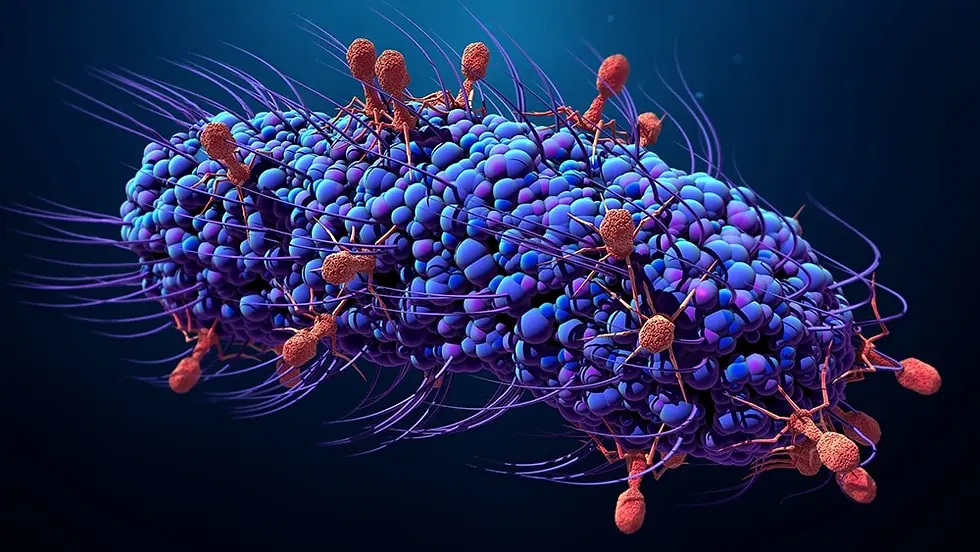
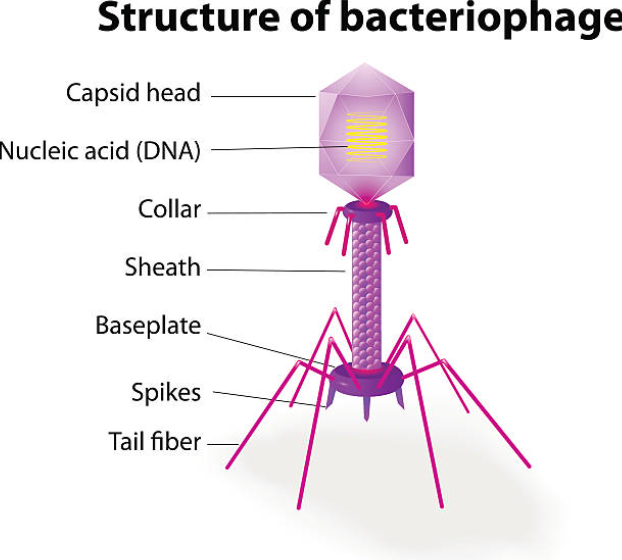
Simply put, a bacteriophage is a virus specially designed to infect bacteria, in a similar way to how other viruses affect your cells. They will inject the bacteria with viral information, which will hijack the microbe's cellular machinery to produce more viruses. Eventually, the cell will burst and die, releasing a horde of new bacteriophage to infect others. Bacteriophages are very specialized and structure themselves to be able to bypass their target cells' natural defenses. If a bacteriophage were specialized and virulent enough, it could cause an extremely deadly pandemic among a bacterial population.
How can it help us?
In the paper, Minyeong Kevin Kim and his team explore a treatment known as phage therapy and how it is developed and done. Surprisingly, phage therapy is actually quite an old area of study, being looked at as a possible treatment in the early 20th century until it was largely abandoned after the widespread use of effective antibiotics. With the new antibiotic resistance crisis, the technology is being looked at anew as a method for producing targeted phages to treat specific resistant bacterial strains.
How does it work?
The process begins with the establishment of a "phage bank", where information about and samples of a phage are stored. From there is susceptibility testing, where various phages are tested against a desired bacterial strain to see how effective, if at all, they are at wiping out the strain. Then is the propagation step, where typically phages are "bred" with feeder bacteria and once enough of the phages are present, the solution is purified so that only they remain. Once a large sample of purified phage is collected, it is processed into various forms and administered to a patient who is then monitored.

The exact details of how this process is carried out depend on which approach is being used: fixed, personalized, or hybrid. Fixed phage therapy utilizes a pre-made broad-spectrum phage treatment; this method is quicker and cheaper but has shown limited success. Personalized phage therapy involves finding a specific phage that affects the specific strain of bacteria a patient is infected with, while much more effective, it is much more costly and time-consuming as it requires extensive screening to find the correct phage. Hybrid systems primarily involve doing both, treating the patient with broad-spectrum phage treatments while also screening for a more focused phage strain.
Why hasn't this become a bigger thing yet?

This developing treatment method is extremely promising, but currently, there are several roadblocks that need to be overcome. Firstly is the difficulty of creating large quantities of phage to use for testing and treatment, as the process of propagation is fairly slow. The second is that phage cocktail design is an extremely difficult process, as the interactions between different phages or even the same phage at different ratios vary heavily between strains and are very hard to predict. Other struggles include, but are not limited to: phage-antibiotic interactions, phage reactions with the immune system, maintaining the integrity and potency of a phage over long-term storage and in the body, the conversion of raw phage samples to forms that can be safely administered to patients, and proper funding, among others. Seemingly, this treatment has a long way to go before it can be seen as a true weapon in mankind's anti-microbial arsenal, but even antibiotics took decades to go from appearing on Alexander Fleming's plates to being a widespread treatment for infections, so there is still hope yet. Hopefully, this treatment can get the TLC it needs and can be rolled out as a safe and effective means of combating infections sooner rather than later, for if things keep going the way they are going, we may just need it.
Work Cited:
Kim, M. K., Kim, J., & Yong, D. (2025). Bacteriophage therapy for multidrug-resistant infections. Experimental & Molecular Medicine, 57, 419–430. https://doi.org/10.1038/s12276-025-01439-2
Comments