
An Antibiotic Hidden in Plain Sight!
Updated: May 6
Since the discovery of penicillin in the early 1900s, antibiotics have saved millions of lives and made modern medicine much safer. They are commonly used for many types of infections, but they're also used during surgeries, cancer treatments and organ transplants. Without antibiotics, many routine medical procedures would carry much greater risks.

However, antibiotic resistance has become a major global health problem. One of the biggest causes of resistance is the overuse and misuse of antibiotics. The use of antibiotics in agriculture and livestock farming has also contributed to the issue. Besides the resistance, another major concern is that scientists are struggling to discover new and truly novel antibiotics. Many of the antibiotics used today are modified versions of older drugs rather than completely new types of treatments.
Developing new antibiotics is difficult, expensive and time consuming. Many pharmaceutical companies invest less in antibiotic research because the financial return is lowered compared to other medications. It is very critical that we find novel antibiotics because antibiotic resistance is rapidly increasing, which can put many people's lives at stake.
What if the next breakthrough drug wasn't discovered in some remote jungle or deep ocean, but was hiding in something scientists have studied for years?
October 29, 2025
That's exactly what researchers recently found. A team from the University of Warwick and Monash University uncovered a previously hidden antibiotic inside a well-known bacteria:Streptomyces coelicolor. The new antibiotic discovered was named pre-methylenomycin C lactone. It had gone unnoticed for decades (since the 1950s!) because it only appears as part of a temporary step in a chemical process that produces the known antibiotic methylenomycin A. In other words, it was there the whole time, just overlooked!

What makes this discovery so exciting is how powerful the compound is. Early results show it can be up to 100 times more effective than current antibiotics against dangerous 'superbugs' like MRSA and VRE. These are bacteria that have become resistant to many of the drugs we rely on today, making infections harder and sometimes impossible to treat.
Even more promising, researchers haven't yet seen these bacteria develop resistance to the new antibiotic. That's a huge deal! One of the biggest problems in modern medicine is antimicrobial resistance, where bacteria evolve faster than we can develop new treatments. This discovery could help shift that balance.
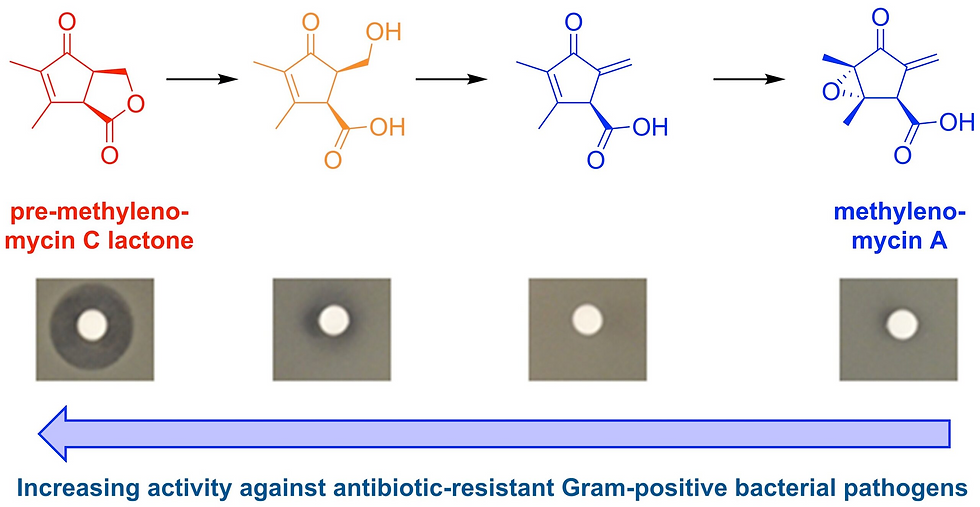
Of course, this is still early-stage research. More testing is needed before this antibiotic could be used for treating patients. At a time when antibiotic resistance is becoming a global crisis, this discovery offers something we don't always see in science headlines: real hope.
Sometimes, the biggest breakthroughs aren't about finding something new. They're about finally seeing what was there all along.
Comments